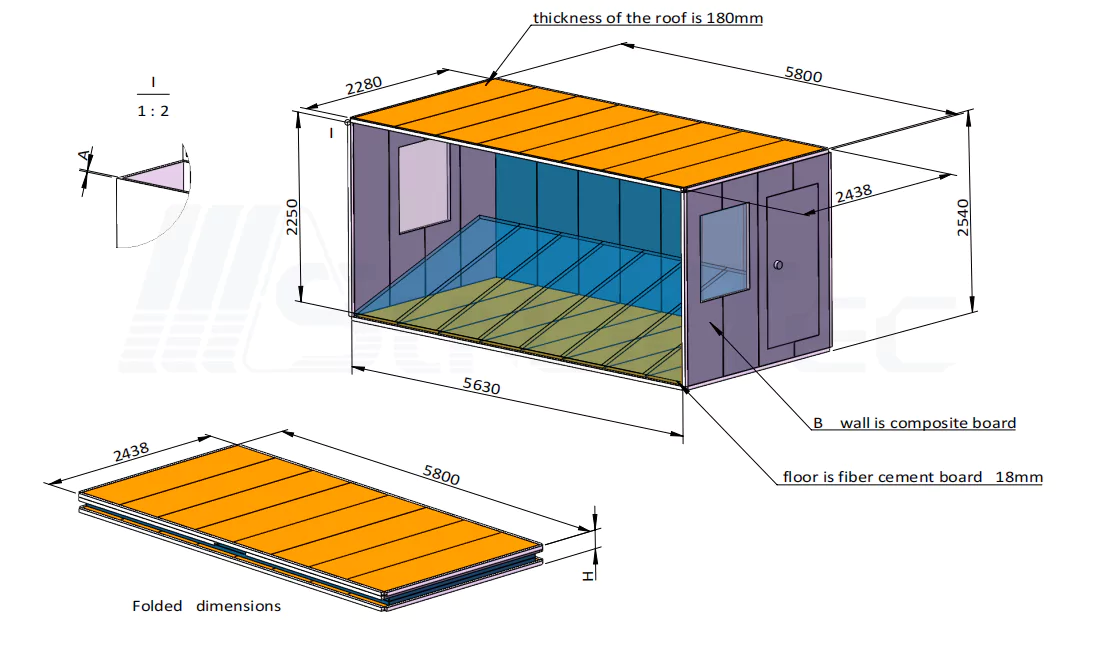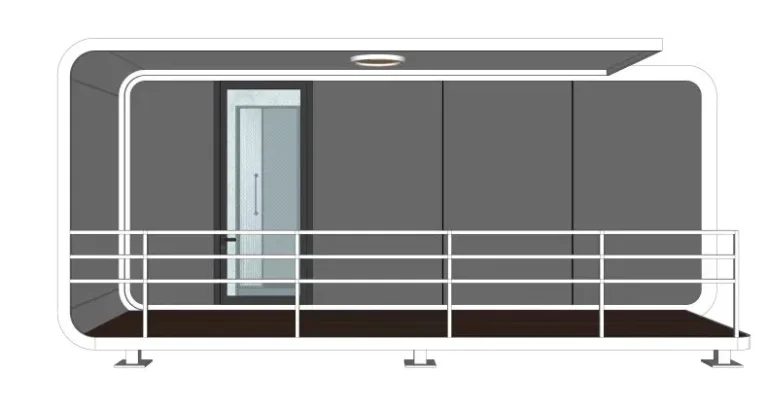
Pour un site d'hébergement commercial, la réalité du terrain se révèle généralement après le premier mois d'activité intense. Les chambres sont occupées, la climatisation fonctionne plus longtemps que prévu, les équipes de nettoyage se déplacent entre les logements et de petites interventions de maintenance commencent à s'ajouter au planning. C'est alors qu'une maison capsule spatiale prouve si elle n'est qu'un bel attrait visuel ou si elle est réellement pratique à exploiter.
Les capsules spatiales à faible consommation énergétique ne se limitent pas à une simple réduction de la consommation d'énergie. Pour les entreprises, leur principal atout réside dans une meilleure gestion au quotidien : un confort intérieur plus constant, une diminution des problèmes de maintenance évitables, une rotation plus rapide des chambres et une configuration des unités facile à gérer pour le personnel. Ces avantages sont particulièrement importants pour les parcs de glamping, les aires de repos routières, les bases de travail isolées et les hébergements de courte durée où chaque chambre doit être fonctionnelle et non pas simplement présente sur le terrain.
La gamme de capsules spatiales de Sunlit Tec Conçue pour une installation extérieure, des espaces de vie compacts et des projets d'hébergement commercial nécessitant un espace modulable utilisable, cette solution répond à une question essentielle pour les acheteurs qui comparent une maison préfabriquée ou un chalet modulaire : comment l'unité se comportera-t-elle au quotidien, avec la présence d'invités, de personnel, les aléas climatiques et les services publics ?
Pourquoi les coûts d'exploitation sont importants après l'occupation
La consommation d'énergie se manifeste dans le fonctionnement quotidien
Le confort intérieur est un élément essentiel du produit dans l'industrie hôtelière. Les clients ne demanderont pas de détails sur l'isolation, la construction des murs ou le plan du câblage électrique, mais ressentiront certainement la différence entre une chambre qui se refroidit lentement, une chambre très humide la nuit ou une chambre glaciale en hiver.
Il est facile de mal évaluer la consommation d'énergie lors de l'achat, car les premières décisions se concentrent souvent sur la taille, l'apparence et l'agencement du modèle. Après la mise en service, la donne change. Les habitudes de chauffage, ventilation et climatisation, la ventilation, l'éclairage, l'eau chaude et la fréquence de nettoyage deviennent des coûts récurrents. Pour 20, 30 ou 50 unités, même de petites différences dans la performance énergétique de chaque pièce peuvent avoir un impact sur la consommation mensuelle.
Une maison capsule spatiale bien conçue permet de mieux prévoir les coûts. Une meilleure isolation assure une température intérieure plus stable. Une surface au sol réduite favorise une réponse plus rapide du chauffage et de la climatisation. Un système de régulation climatique adapté permet d'optimiser le confort thermique en fonction des conditions climatiques locales, évitant ainsi d'imposer une configuration standard sur tous les sites.
Les performances énergétiques réelles dépendront du climat local, de l'occupation, des heures d'utilisation, des réglages du système de chauffage, de ventilation et de climatisation, du système d'isolation et du coût de l'électricité. Un camping côtier pourrait être davantage sensible à l'humidité et à l'air salin. En zone montagneuse, il conviendrait de privilégier la rétention de chaleur et les vents. Ces éléments doivent guider le choix du modèle avant la mise en service du projet.
Les unités répétables facilitent la gestion des sites multi-sites.
La plupart des projets de capsules spatiales B2B ne sont pas construits autour d'une seule unité. Un complexe touristique peut démarrer par une première phase et s'étendre ultérieurement. Un projet d'aire de repos routière peut nécessiter des unités similaires réparties sur plusieurs points de service. Une base de travail isolée peut s'appuyer sur une petite équipe sur place plutôt que sur des entreprises spécialisées.
La répétabilité est un atout. Lorsque les cabines modulaires partagent des agencements, des systèmes électriques, des options de salle de bain et des points d'accès pour l'entretien similaires, le personnel travaille avec moins d'imprévus. Les équipes de nettoyage connaissent la circulation dans les cabines. Les équipes de maintenance savent où vérifier les connexions. La gestion des pièces de rechange et les procédures d'inspection sont simplifiées.
Lors d'une rotation des clients le week-end dans un site de glamping, même un court retard dans la vérification de chaque hébergement peut impacter la réservation suivante. Dans une aire de repos routière, la facilité d'accès aux équipements est aussi importante que l'esthétique extérieure. Sur les sites isolés, un accès simple pour la maintenance peut faire gagner plus de temps que des améliorations décoratives.
Comment une maison capsule spatiale peut-elle utiliser l'énergie plus efficacement ?
Isolation, taille de la pièce et contrôle climatique
L'isolation influe sur les coûts d'exploitation quotidiens. Elle détermine la vitesse à laquelle l'air intérieur se réchauffe ou se refroidit, ainsi que la fréquence de fonctionnement du système de climatisation. Ceci est particulièrement important pour les hébergements extérieurs, susceptibles d'être exposés au soleil, au vent, à la pluie, à l'humidité et au froid du sol.
Capsule spatiale E2 de Sunlit Tec Ce modèle constitue une référence utile pour les acheteurs B2B. D'une superficie de 38 m², il peut accueillir de 2 à 4 personnes, affiche une consommation électrique totale de 8 kW et un poids net total de 8,5 tonnes. Pour les complexes hôteliers, les campings et les hébergements de longue durée, ces données permettent aux équipes de comparer le confort des chambres, la consommation énergétique, la capacité d'accueil et les pratiques d'exploitation.
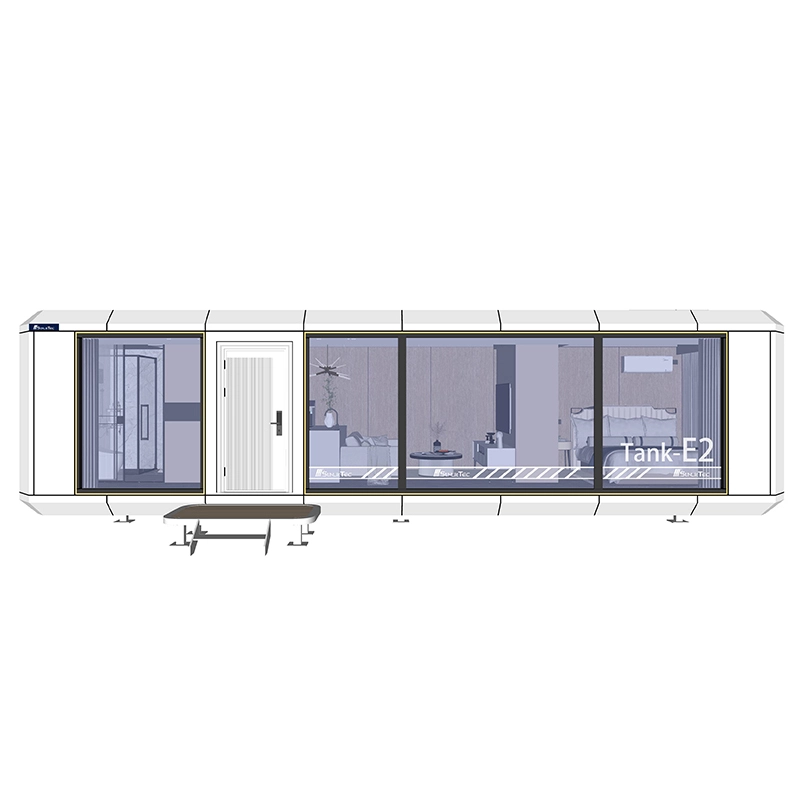
L'espace réduit influe également sur la réponse thermique. Capsule spatiale E1 de Sunlit Tec Ce modèle offre 28 m² pour 2 personnes et une consommation électrique totale de 8 kW. Pour les chambres d'hôtes à forte rotation ou les logements du personnel, une surface au sol réduite peut faciliter la gestion du chauffage, de la climatisation, du nettoyage et de l'inspection.
Il ne faut pas présumer d'un pourcentage fixe d'économies d'énergie pour chaque projet. Les résultats finaux dépendent du climat, de l'utilisation quotidienne, des réglages du système de chauffage, de ventilation et de climatisation, du comportement des occupants et des tarifs des services publics. Cela dit, une maison capsule spatiale bien conçue offre aux exploitants un meilleur contrôle de la consommation d'énergie qu'une unité mal planifiée et mal configurée.
Les systèmes intégrés réduisent la coordination quotidienne
La capsule TANK de Sunlit Tec est une unité modulaire préfabriquée conçue pour le camping, l'hébergement en plein air et les aires de repos routières. Elle comprend un espace de couchage, la climatisation, un système électrique et un module de salle de bain en option.
Pour les exploitants commerciaux, l'installation intégrée est avantageuse car elle simplifie la gestion de systèmes moins nombreux et moins distincts. L'éclairage, la climatisation, l'accès à l'électricité et les sanitaires (en option) doivent fonctionner de concert au quotidien. Lorsque ces fonctions sont intégrées à l'unité, l'équipe sur site dispose d'une base opérationnelle plus claire.
Le résultat optimal dépend toujours de la configuration pratique. Le drainage, la capacité électrique, la ventilation, la gestion de l'humidité et l'accès pour l'entretien doivent être vérifiés en fonction de l'usage prévu. Par exemple, une aire de repos routière peut nécessiter un accès plus rapide pour le nettoyage, tandis qu'une capsule de complexe hôtelier peut exiger une meilleure intimité grâce à des espaces plus intimes et une orientation des fenêtres adaptée.
Modèles Sunlit Tec pour différents besoins opérationnels
Le choix du modèle doit se baser sur le mode d'exploitation du site, et non sur l'image du catalogue. Un camping privilégie généralement la densité et la rotation des clients. Un complexe hôtelier s'intéresse au confort, à la vue et au prix de la nuitée. Les projets d'aménagement des abords des routes mettent souvent l'accent sur la rapidité de nettoyage, la durabilité et l'accessibilité des composants.
| Modèle | Zone de construction | Occupation | Considérations opérationnelles |
| Capsule spatiale entièrement fermée E1 | 28 m² | 2 personnes | Encombrement réduit pour les unités d'accueil ou les logements du personnel |
| Capsule d'espace de bonne performance d'isolation E2 | 38m² | 2 à 4 personnes | Aménagement isolé plus spacieux pour les complexes hôteliers, les campings et les longs séjours. |
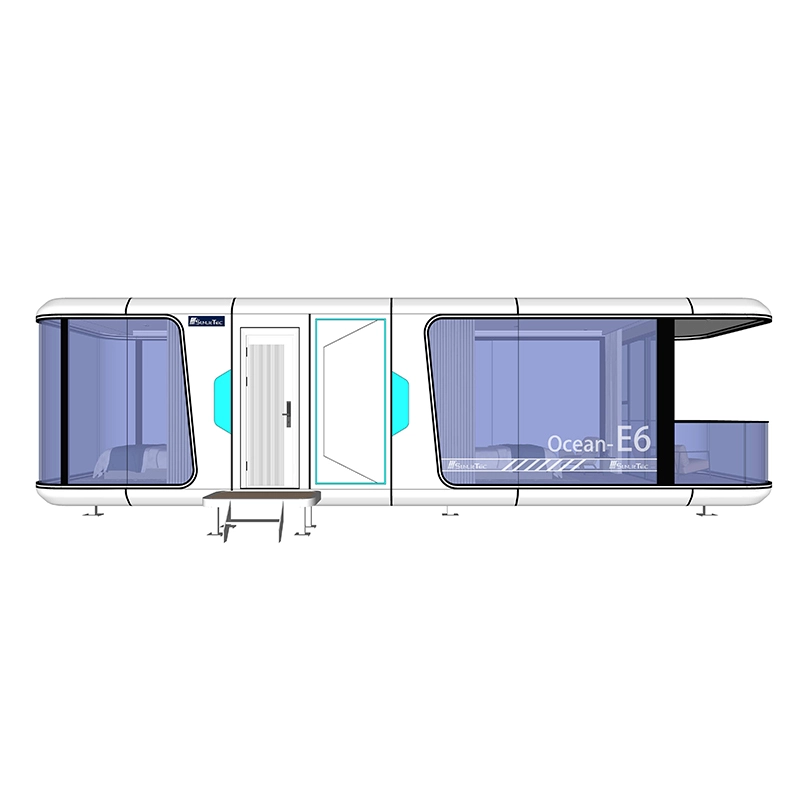
| Capsule spatiale E6 avec balcon | 38m² | 2 à 4 personnes | Des séjours pittoresques où la vue extérieure et le confort des clients sont primordiaux. |
| Capsule spatiale X7 | 38m² | 2 à 4 personnes | projets d'hébergement haut de gamme ou de chambres d'hôtes commerciales |
Les informations relatives aux modèles sont basées sur les listes de produits de capsules spatiales de Sunlit Tec. Les spécifications peuvent varier selon le modèle, la configuration et les exigences du projet.
Les unités plus petites permettent une densité d'occupation plus élevée et une rotation plus rapide. Les modèles plus grands, de 38 m², peuvent convenir aux clients séjournant plus longtemps, souhaitant plus d'intimité ou recherchant un confort supérieur. Le choix optimal dépend du profil des clients, du climat, de l'accès aux services, de l'organisation du travail et du taux d'occupation.
Liste de contrôle des applications et du fonctionnement B2B
Où les capsules spatiales économes en énergie trouvent-elles leur place ?
Les capsules spatiales à faible consommation d'énergie peuvent servir différents secteurs commerciaux :
- Hôtels et sites de glamping : chambres modernes, séjours pittoresques, hébergements de courte durée haut de gamme
- Aires de repos routières : unités de repos compactes, locaux pour le personnel, aires de stationnement de courte durée, zones d’assistance.
- Bases de travail à distance : logements temporaires, hébergements saisonniers, unités de camp de projet
- Sites commerciaux en plein air : projets d’hébergement flexible, d’espace de réception ou de cabanes modulaires à usage mixte
Un site de glamping en bord de mer nécessitera une attention particulière à l'humidité, à la ventilation et aux détails résistants à la corrosion. Un refuge de montagne privilégiera la conservation de la chaleur et la protection contre le vent. Une aire de repos routière accordera plus d'importance au nettoyage des voies d'accès, à l'accessibilité des sanitaires et à une inspection rapide entre chaque utilisateur.
Quels sont les facteurs qui influencent les coûts d'exploitation après l'installation ?
Avant de choisir le modèle définitif, les acheteurs B2B doivent examiner les éléments qui influencent leurs opérations quotidiennes :
- Changements climatiques locaux et saisonniers de température
- Durée d'utilisation prévue du système de chauffage, ventilation et climatisation
- Configuration de l'isolation et dimensions de la pièce
- Charge électrique pendant les périodes de pointe
- Contrôle de la ventilation et de l'humidité
- Circuit de nettoyage entre les unités
- Accès aux composants électriques et de salle de bain
- Planification des pièces de rechange pour la maintenance multi-unités
- Espacement pour préserver l'intimité des invités et orientation des fenêtres
- Flux de travail du personnel lors des arrivées, des départs et de la remise en état des chambres
Ces détails ne sont pas toujours les plus visibles d'un projet, mais ils déterminent souvent le bon fonctionnement du site après son ouverture. Un local qui rend bien en photo doit aussi être facile à nettoyer, à entretenir, à climatiser, à chauffer et à maintenir confortable.
Pourquoi Sunlit Tec fonctionne pour les projets B2B multi-sites
La gamme de produits de Sunlit Tec comprend des capsules spatiales, des cabanes à pommes, des maisons conteneurs, des maisons en panneaux et des solutions pour projets publics. Pour un site à usage mixte, cela offre aux acheteurs commerciaux un choix de produits plus vaste, leur évitant ainsi de traiter chaque structure comme une demande d'approvisionnement distincte.
L'intérêt d'un projet de capsule spatiale Sunlit Tec ne réside pas uniquement dans son esthétique futuriste. Les capsules plus petites permettent une plus grande densité et une rotation plus rapide. Les modèles plus grands peuvent accueillir des séjours plus longs ou des chambres haut de gamme. La capsule TANK est idéale pour l'hébergement en plein air et les aires de repos routières où un espace fonctionnel et rapide est essentiel.
Sunlit Tec aide les acheteurs à répondre aux besoins en pièces compactes, espaces de repos et sites à usage mixte grâce à un système modulaire unique.
Conclusion
Les capsules spatiales à haute efficacité énergétique permettent aux projets B2B de maîtriser leurs coûts d'exploitation après installation grâce à une isolation performante, un agencement compact, des systèmes électriques intégrés, une climatisation efficace et une maintenance simplifiée des unités multiples. Leur intérêt se révèle particulièrement lors des nuits d'occupation, en haute saison et durant la rotation quotidienne des locataires.
Le choix du modèle doit commencer par l'analyse des conditions du site, du climat local, de l'accès aux services publics, du plan d'occupation et de l'organisation du travail du personnel. Sunlit Tec accompagne les acheteurs B2B Sunlit Tec propose des solutions de capsules spatiales et de cabines modulaires pour les complexes hôteliers, les campings, les aires de repos routières et les hébergements isolés. Pour la planification de votre projet, Sunlit Tec vous aide à choisir le modèle de capsule spatiale le mieux adapté à vos besoins d'aménagement, d'exploitation et à obtenir un devis détaillé avant toute commande en gros.
FAQ (questions fréquentes)
Q1 : Que doivent vérifier les acheteurs avant de choisir une maison capsule spatiale ?
A : Vérifier la superficie du bâtiment, l'occupation, l'isolation, la consommation d'énergie, les besoins en CVC, les options de salle de bain, le climat du site et le service après-vente.
Q2 : Comment une maison préfabriquée peut-elle affecter les coûts d'exploitation à long terme ?
A: La taille de la pièce, l'isolation, les réglages du système de chauffage, de ventilation et de climatisation, les tarifs des services publics et l'accès pour l'entretien influencent tous le coût quotidien après l'installation.
Q3 : Une cabine modulaire est-elle adaptée aux projets commerciaux de grande envergure ?
R : Oui. Les agencements répétables aident les acheteurs à gérer plus efficacement le nettoyage, la maintenance, les pièces de rechange et l'expansion multi-unités.
Q4 : Quel modèle de capsule spatiale Sunlit Tec convient aux projets d’hébergement de plus grande envergure ?
A: Les modèles E2, E6 et X7 offrent des aménagements de 38 m² pour 2 à 4 personnes, adaptés aux complexes hôteliers, aux campings et aux hébergements haut de gamme.
Q5 : Les capsules spatiales Sunlit Tec peuvent-elles soutenir les projets d’aires de repos routières ?
R : Oui. La capsule TANK permet un hébergement en plein air et une utilisation comme lieu de repos en bord de route, avec des fonctions de couchage, de climatisation, d'électricité et de salle de bain en option.