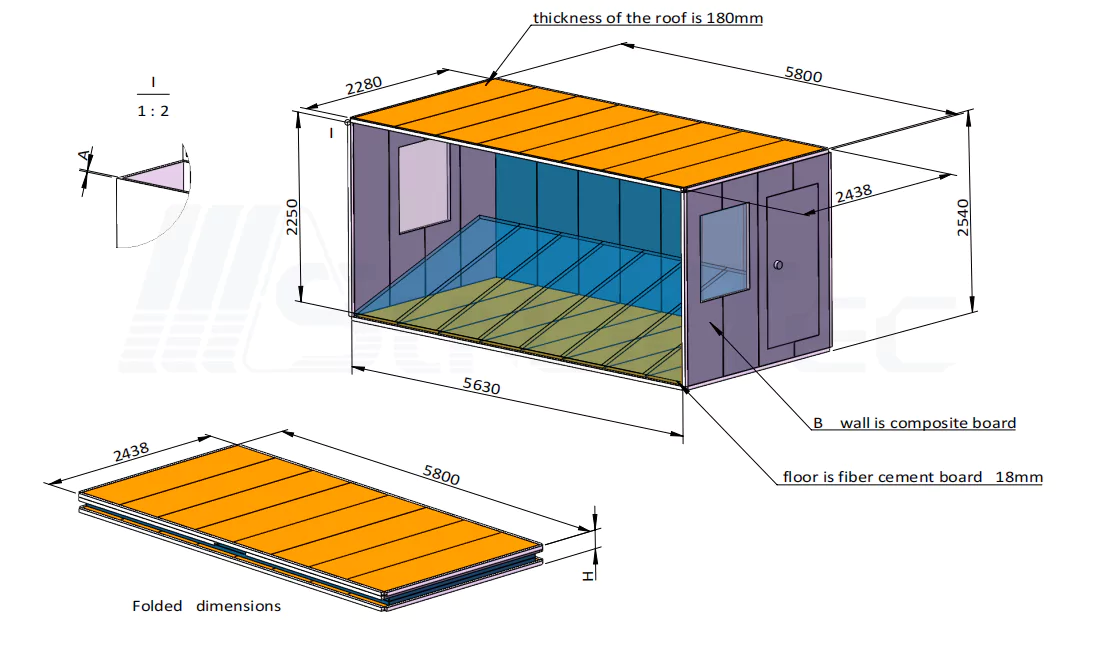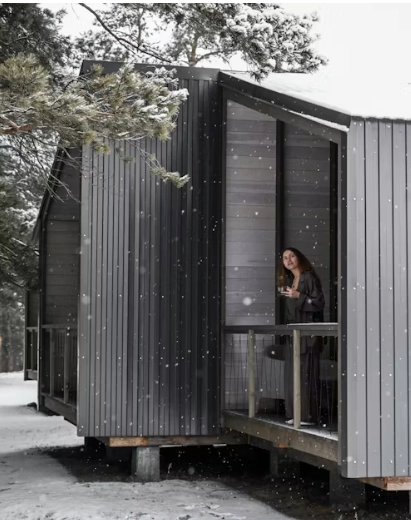
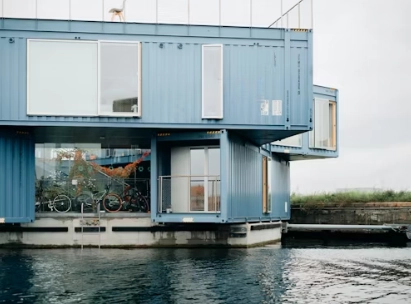
Before placing a container house, it’s essential to carefully evaluate the site to ensure long-term stability and comfort. The first step involves assessing terrain, drainage, and exposure to environmental elements such as wind and sunlight. Mobile homes, in a broad sense, refer to factory-assembled, prefabricated buildings that can be moved as a whole or easily disassembled, transported, and reassembled. It has strong flexibility and is relatively affordable compared to traditional architecture. This flexibility allows container houses to adapt to different terrains, but proper site evaluation ensures optimal performance of insulation and structural systems.
Access to utilities is another critical factor. Sites should be positioned where electrical lines, water supply, and waste management systems can be conveniently connected. If off-grid living is preferred, solar panels or independent waste systems can be integrated later in the installation process.
Establishing a Solid Foundation
A stable foundation is fundamental for both safety and longevity. A hardened level ground provides the best base for most container house models. In areas without pre-hardened surfaces, concrete pillars or cement foundations are recommended to distribute weight evenly. For clients who prioritize mobility, custom trailer frames can be installed beneath the structure to allow easy relocation without compromising integrity. The main frame of the mobile house is made of galvanized steel pipes, which can ensure the overall safety performance of the house, achieving a seismic resistance level of 10 and a wind resistance level of 12.
Selecting and Customizing Your Container House
Selecting a suitable model depends on intended use—whether residential, commercial, or mixed-use. Our portfolio includes several models designed for various applications. The C1 Container House follows standard 20-foot sea freight dimensions for easy transport and stacking. Due to the use of containers as the main structure, C1 container houses can facilitate container transportation, significantly reducing transportation costs. The C1.1 Container House with Balcony enhances living quality with an outdoor balcony that expands usable space while maintaining portability.
For larger families or villa-style experiences, models like the double-storey triangle C7 offer up to 55m² of living area with full structural reinforcement for seismic resistance level 9 and wind resistance level 12. Each model supports modular design principles that allow combination or stacking based on project requirements—a concept derived from modular construction methods described in industry reports where “each part is like an independent building block.”
Customizing Interior and Exterior Features
Customization transforms a standard container into a personalized space suited for long-term habitation or business operation. Interior layouts can integrate kitchens, bathrooms, or office zones depending on client needs. Exterior modifications such as balconies (as in C1.1) or terraces (as in CA2) improve both aesthetics and functionality by extending outdoor usability while maintaining compactness for transport efficiency. The addition of this outdoor space has increased the diversity of residents’ lives. Balconies not only expand activity space but also enhance living comfort in all aspects.
Installation Process of the Container House
Once fabrication is complete at our production facility—where structures are fully inspected—the unit is prepared for shipment by sea or land freight, depending on destination distance. After the completion of the house construction, it needs to be moved onto a vehicle with the help of a crane. Our logistics team coordinates delivery schedules to ensure smooth arrival at your designated site while minimizing handling risks during unloading operations.
Upon delivery, cranes position each module precisely on its foundation or trailer frame according to pre-engineered alignment drawings provided with every order. Models like C2 are designed for modular shipment; they “can be disassembled and combined according to needs,” allowing flexible assembly even in constrained spaces.
Assembly and Construction Techniques
Assembly involves connecting prefabricated modules through corner fasteners and beam joints secured by embedded bolts within concrete bases when applicable. Electrical conduits and plumbing lines are preinstalled at the factory level; hence, on-site work mainly consists of joining interfaces between modules and verifying system continuity before occupancy approval. Units such as С4 utilize top-and-bottom split designs that simplify stacking during installation while ensuring structural rigidity once assembled on-site through reinforced welding seams.
Connecting Utilities and Ensuring Functionality
Our standard practice connects all units directly to national grid systems upon installation completion; however, photovoltaic integration remains available upon request for clients pursuing energy independence projects or remote deployments where grid access may be limited. Internal wiring adheres strictly to international safety standards using flame-retardant materials consistent with CE certification requirements mentioned across our corporate documentation.
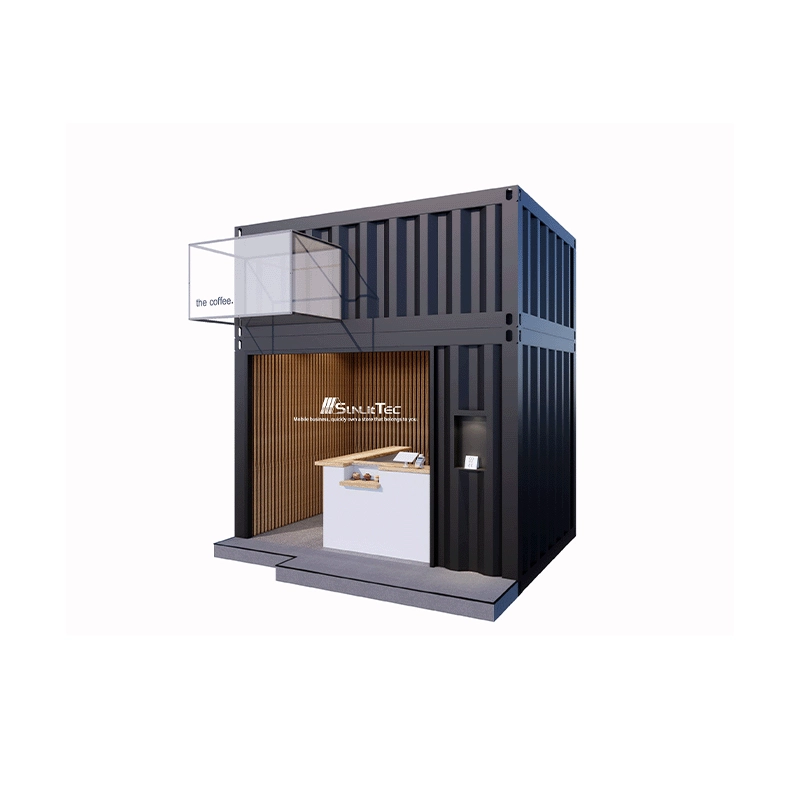
Plumbing and Waste Management Solutions
Container houses incorporate comprehensive plumbing solutions tailored to internal layouts established during customization stages. Wastewater outlets align with local drainage codes; optional greywater recycling systems may also be integrated if sustainability goals dictate so. For off-grid applications—especially in rural tourism settings—self-contained septic tanks provide reliable waste management without external connections.
Sunlit Tec: надежный поставщик космических капсул
Founded on over fifteen years of engineering experience in steel structure manufacturing, Sunlit Tec компанией has evolved into a global provider specializing in modern integrated cabins, including space capsules, apple cabins, board houses, and container houses distributed worldwide across Europe, America, Southeast Asia, and the Middle East. Sunlit Tec is a company that specializes in providing space system solutions for modern integrated cabins, mobile houses, container renovation spaces, smart communities, and other aspects. We emphasize quality through galvanized steel frames combined with polyurethane insulation, achieving non-flammability ratings suitable for both tropical heat zones and subzero environments down to –40 °C when equipped with optional floor heating systems.
Our product line—from compact single-room modules like CA3 sloping roof offices to expansive multi-story residences like C8—reflects our commitment to innovation grounded in practical design principles validated by international certifications (CE & ISO9001). Every project benefits from our one-stop service model encompassing design consultation, manufacturing supervision, logistics coordination, installation guidance videos, and lifetime technical support availability through our professional team accessible via our contact platform.
Вывод
Preparing your site begins with evaluating environmental suitability, followed by establishing robust foundations adaptable across diverse terrains using either hardened ground or reinforced concrete bases anchored with bolts for stability. Selecting appropriate models, such as expandable units or modular villas, allows tailored scalability while interior customization ensures comfort aligned with specific functional goals—from residential home stays to commercial studios.
During installation, we oversee transport logistics, ensuring safe delivery; assembly employs precision fastening techniques linking modules securely atop foundations before connecting utilities compliant with grid standards or renewable alternatives when requested. Through this systematic approach, we deliver durable structures capable of immediate occupancy upon connection—embodying efficiency inherent within modern prefabricated architecture. For detailed consultation regarding project specifications or partnership opportunities, please visit our official contact page, where our engineering consultants will assist you throughout the planning stages toward successful deployment.
Часто задаваемые вопросы
Q1: What are the foundation requirements for a container house?
A1: Container houses require either hardened level ground or concrete foundations embedded with bolts, thus ensuring structural stability even under high wind conditions equivalent to level 12 resistance ratings.
Q2: Can I customize the interior layout of my container house?
A2: Yes—each model supports bespoke configurations allowing integration of kitchens, bathrooms, or office areas; renderings are produced before production, to confirm spatial arrangements meet client expectations.
Q3: Предоставляет ли Sunlit Tec услуги технического обслуживания?
A3: While maintenance services are not included post-delivery, we provide replacement components under warranty terms alongside continuous technical assistance, ensuring long-term operational reliability across all installations worldwide.